RESEARCH
Methane Pyrolysis Builds Better Carbon Fiber
A Nature Sustainability study shows electrified methane pyrolysis can produce carbon fiber hitting 1.7 GPa tensile strength, at a fraction of the usual cost
19 Jun 2026
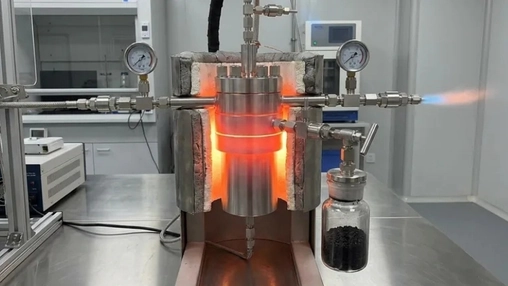
Researchers have shown that methane pyrolysis can produce high-performance carbon fibre, potentially disrupting a manufacturing sector long dependent on expensive synthetic precursors.
Published in Nature Sustainability on April 16, 2026, the study describes an electrified conversion process that incorporates methane-derived carbon directly into fibre architecture at temperatures reaching 1,700K. Fibres produced by the method achieved a tensile strength of 1.7 GPa and a modulus of 173 GPa, figures that sit within the range of leading commercial products.
Nearly half the finished fibre, by weight, consists of carbon drawn from methane rather than from polyacrylonitrile, the synthetic polymer that dominates conventional production. Polyacrylonitrile supply chains carry persistent price volatility, and substituting nearly half the input mass with methane-derived carbon could reduce costs materially for aerospace, automotive, and wind-energy manufacturers.
Because the conversion stage runs on electricity rather than combustion heat, operators can draw from renewable sources, aligning the process with broader industrial efforts to reduce emissions from high-temperature manufacturing.
Investor interest in methane pyrolysis has grown steadily, driven in part by the solid-carbon co-products generated alongside hydrogen. BIS Research documented rising appetite for these streams in mid-2025. Carbon fibre produced this way could offer pyrolysis operators a second revenue path beyond hydrogen, strengthening the commercial case for scaling beyond laboratory conditions.
Pilot-scale validation remains the next threshold. With mechanical benchmarks confirmed and a clear feedstock strategy established, the distance between laboratory results and commercial production looks shorter than it did before this study.
Related News


topics on the agenda
SCALING UP TURQUOISE HYDROGEN THROUGH HIGH-TEMPERATURE METHANE PYROLYSIS
DAY 1: undefined
09:30 - 09:55
FIRST-PRINCIPLES-BASED PREDICTIVE MODELING OF A TUBULAR REACTOR FOR THERMAL METHANE PYROLYSIS
DAY 1: undefined
11:30 - 11:55
COMMERCIAL SCALING OF METHANE PYROLYSIS IN TEXAS
DAY 1: undefined
12:00 - 12:25
SUBSCRIBE FOR UPDATES
By submitting, you agree to receive email communications from the event organizers, including upcoming promotions and discounted tickets, news, and access to related events.